
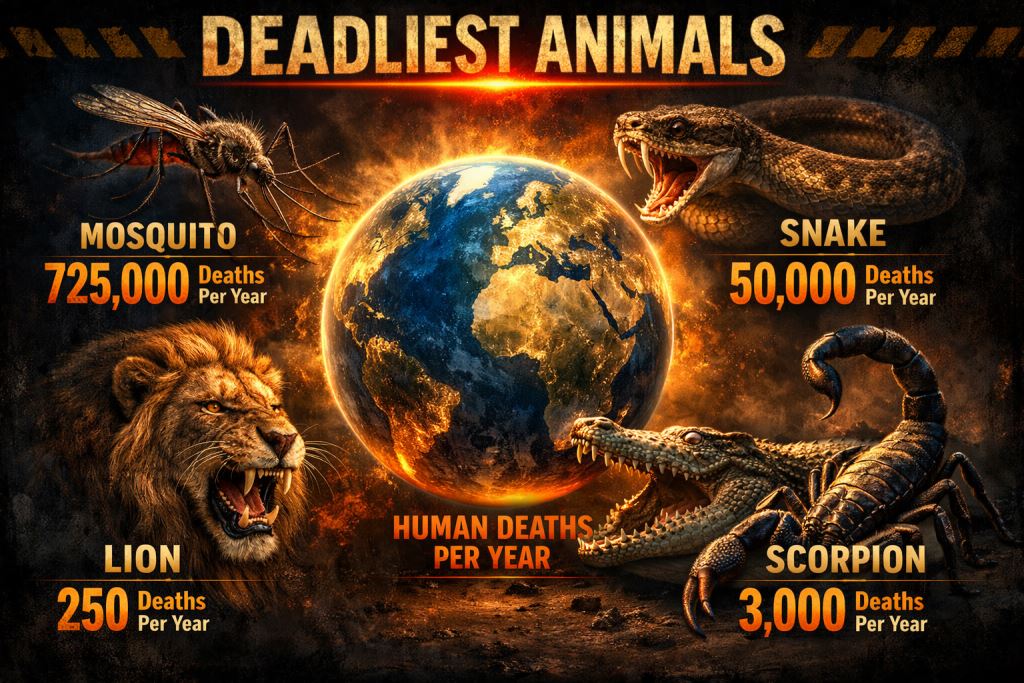
Introduction: The Truth About the World’s Deadliest Animals
When people imagine the deadliest animals, they often think of terrifying predators—sharks, lions, or crocodiles. Movies and documentaries reinforce the idea that the biggest and fiercest creatures are the most dangerous.
But the reality is far more surprising.
The animals responsible for the most human deaths each year are often small, unnoticed, and sometimes even familiar. In fact, the most dangerous creature on Earth is smaller than your fingernail.
Understanding which animals truly cause the most human fatalities helps us rethink risk, improve public health strategies, and appreciate how complex our relationship with wildlife really is.
In this article, we’ll explore the world’s deadliest animals based on estimated annual human deaths, compare their impact, and uncover fascinating insights about why these creatures are so deadly.
The Deadliest Animals by Human Deaths Per Year
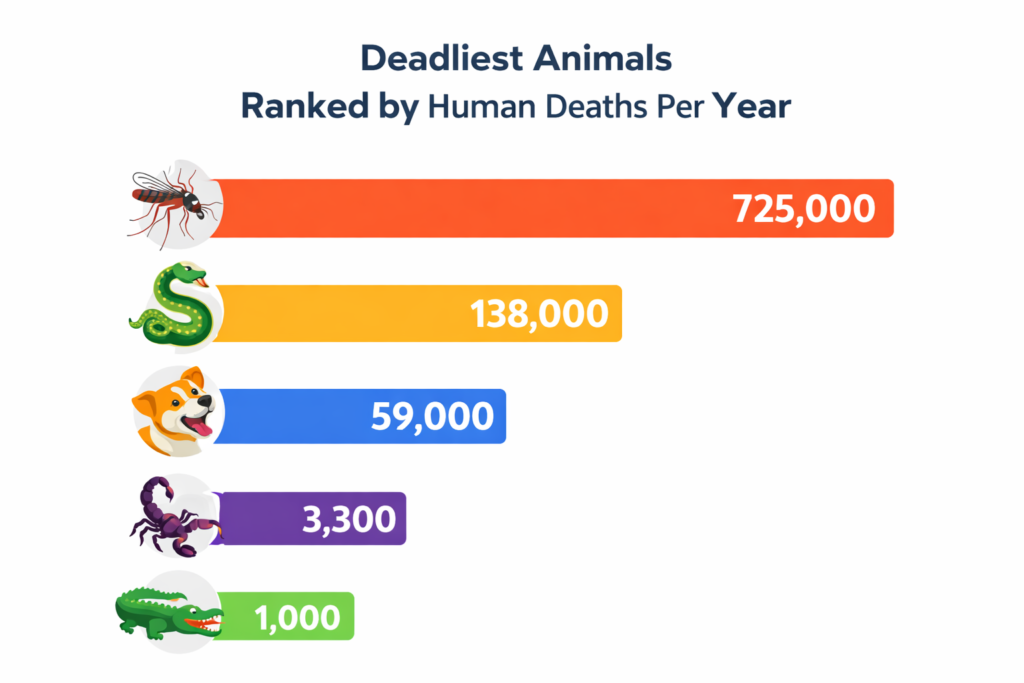
Below is a simplified comparison of some of the animals responsible for the most human deaths annually.
| Rank | Animal | Estimated Human Deaths Per Year | Primary Cause |
|---|---|---|---|
| 1 | Mosquito | ~725,000 | Disease transmission (malaria, dengue) |
| 2 | Humans | ~400,000 | Violence and homicide |
| 3 | Snake | ~100,000+ | Venomous bites |
| 4 | Dogs | ~59,000 | Rabies infection |
| 5 | Assassin Bug | ~10,000 | Chagas disease |
| 6 | Scorpions | ~3,000 | Venomous stings |
| 7 | Crocodiles | ~1,000 | Predatory attacks |
| 8 | Elephants | ~600 | Defensive attacks |
| 9 | Hippopotamus | ~500 | Territorial aggression |
| 10 | Lions | ~200 | Predatory attacks |
According to research summarized by platforms like Statista and global health data studies, mosquitoes alone account for hundreds of thousands of deaths every year, mostly through diseases such as malaria and dengue.
This statistic alone changes how we think about danger in the animal kingdom.
1. Mosquito — The Tiny but Deadliest Animal on Earth
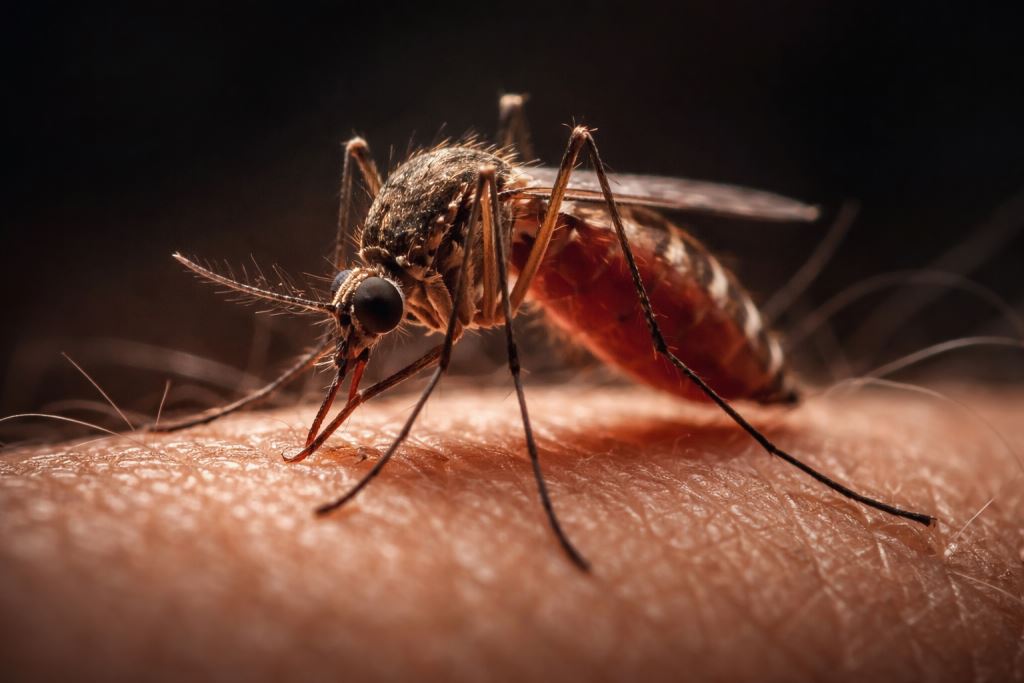
Estimated deaths per year: 725,000+
The mosquito may look harmless, but it is the deadliest animal in the world.
Unlike predators that kill directly, mosquitoes spread deadly diseases including:
- Malaria
- Dengue fever
- Zika virus
- Yellow fever
- West Nile virus
Malaria alone causes hundreds of thousands of deaths every year, particularly in Africa and parts of Asia.
Why mosquitoes are so dangerous
Several factors amplify their impact:
- They exist almost everywhere on Earth
- Female mosquitoes feed on blood
- They act as vectors for multiple deadly diseases
- They reproduce rapidly
This combination makes them far more lethal than large predators.
2. Humans — The Second Deadliest Animal
Estimated deaths per year: 400,000+
It may feel strange to include humans on a list of animals, but biologically speaking, we are animals too.
Globally, homicide alone causes hundreds of thousands of deaths each year.
Unlike other creatures that kill for survival, humans kill for a variety of reasons:
- Conflict
- Crime
- War
- Social instability
This statistic reminds us that sometimes the greatest threat to humans is other humans.
3. Snakes — Silent but Deadly
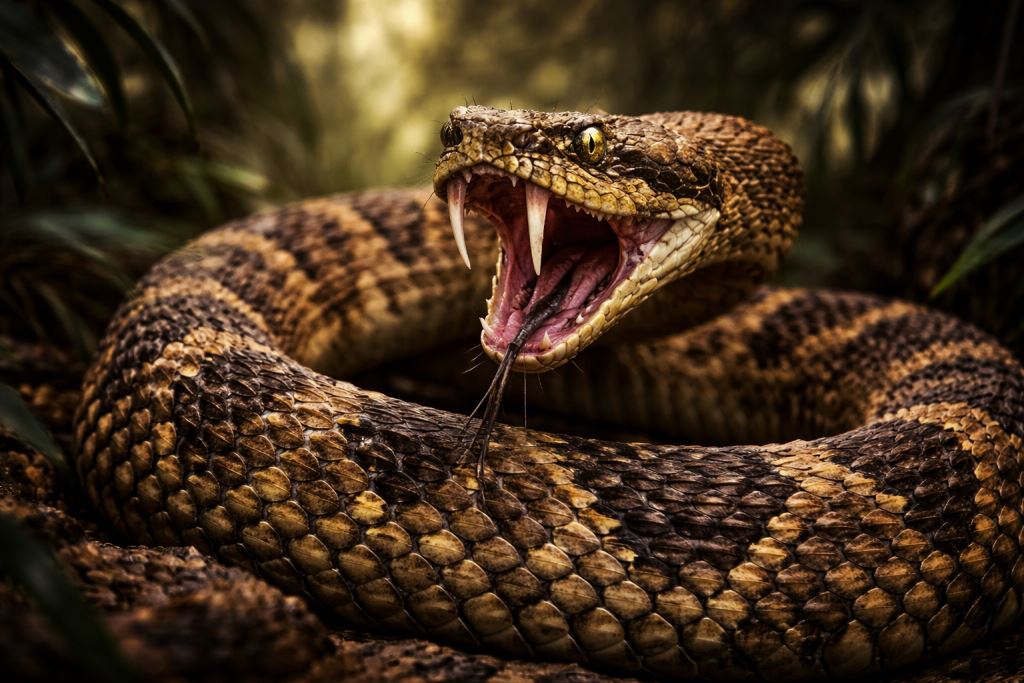
Estimated deaths per year: 100,000+
Snakes are responsible for more than 100,000 deaths annually, making them the most deadly reptiles for humans.
Most snakebite fatalities occur in:
- Rural agricultural regions
- South Asia
- Sub-Saharan Africa
Why snakebites are so deadly
Several factors increase the risk:
- Limited access to antivenom
- Delayed medical treatment
- Lack of protective footwear among farmers
Interestingly, snakes rarely attack intentionally. Most bites happen when people accidentally step on or disturb them.
4. Dogs — A Surprising Entry
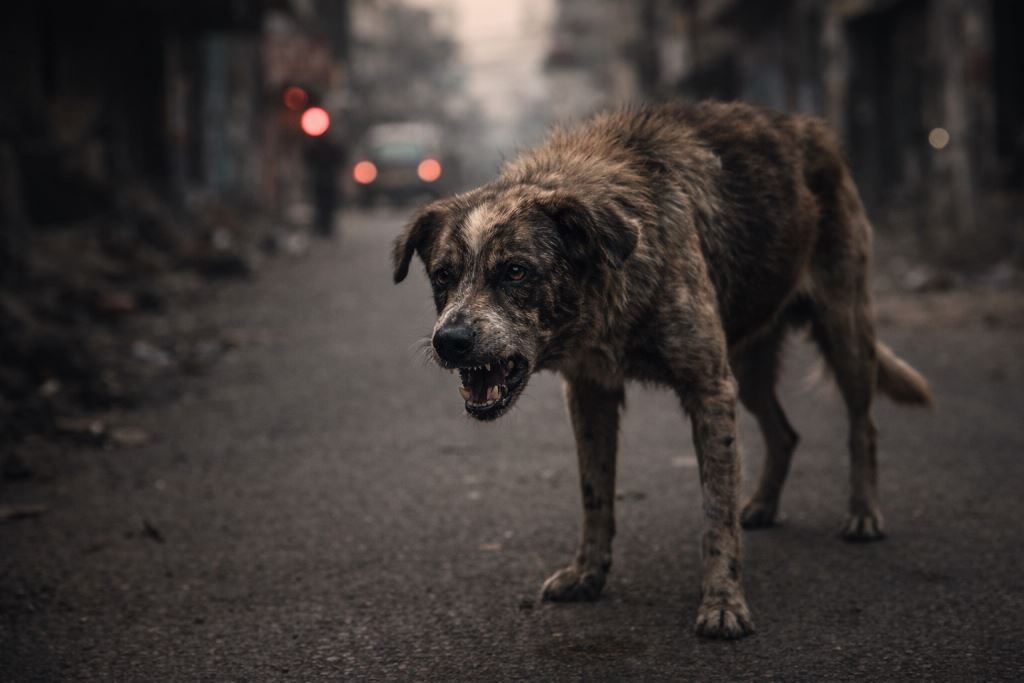
Estimated deaths per year: 59,000
Dogs are often called man’s best friend, yet they are responsible for tens of thousands of deaths each year.
However, the cause is rarely a direct attack.
Most deaths occur due to rabies, a virus transmitted through bites from infected dogs.
Once symptoms appear, rabies is almost always fatal without early treatment.
Countries with widespread vaccination programs have dramatically reduced rabies deaths, showing how public health measures can save lives.
5. Assassin Bugs — The Hidden Killer
Estimated deaths per year: ~10,000
Also known as kissing bugs, assassin bugs spread Chagas disease, a parasitic infection common in parts of Latin America.
Unlike predators, assassin bugs kill indirectly by transmitting parasites while feeding on human blood.
Symptoms of Chagas disease may include:
- Heart complications
- Digestive disorders
- Chronic organ damage
Because the disease develops slowly, many victims don’t realize they’re infected for years.
6. Scorpions — Small but Venomous
Estimated deaths per year: ~3,000
Scorpions may look like creatures from a nightmare, and in many cases, they deserve that reputation.
Their venom can cause:
- Severe pain
- Organ failure
- Respiratory problems
Children are especially vulnerable.
Most fatalities occur in:
- North Africa
- The Middle East
- Mexico
- India
Despite their frightening appearance, most scorpion species are not deadly to humans.
7. Crocodiles — The Ultimate Ambush Predator
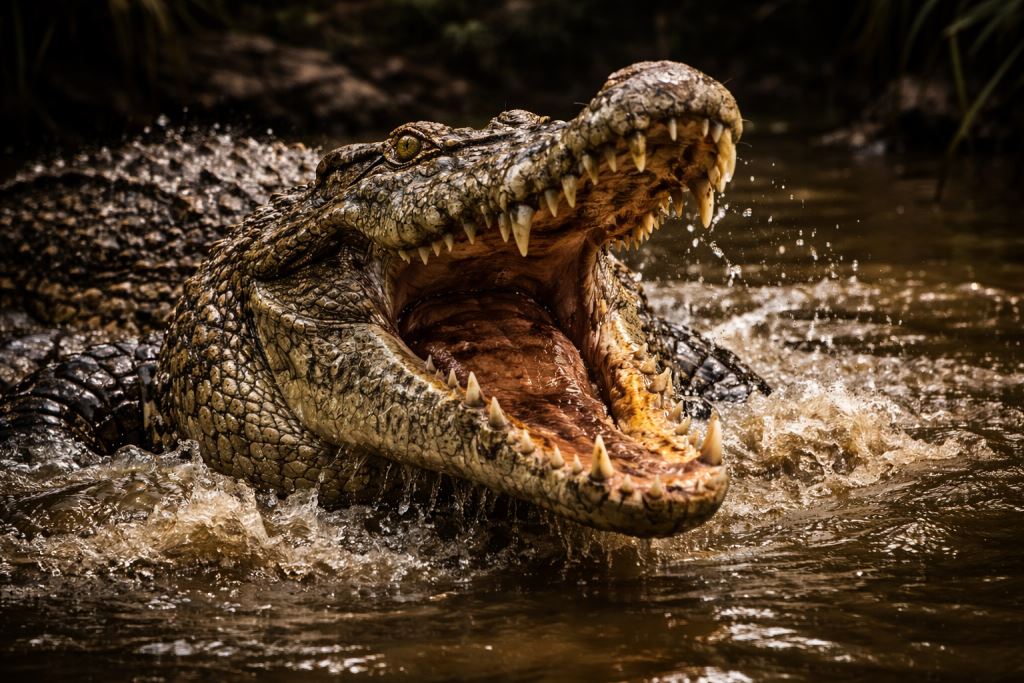
Estimated deaths per year: ~1,000
Crocodiles are among the largest and most powerful predators on Earth.
Unlike many animals, crocodiles actively hunt large prey—including humans.
Their hunting strategy is terrifyingly effective:
- Silent underwater approach
- Sudden ambush attack
- Powerful bite and death roll
Attacks occur mostly in:
- Africa
- Southeast Asia
- Northern Australia
Even though they kill fewer people than insects or parasites, crocodiles remain one of the most feared predators in the wild.
8. Elephants — Deadly When Threatened
Estimated deaths per year: ~600
Elephants are usually peaceful animals, but when they feel threatened or provoked, they can become extremely dangerous.
Fatal encounters often occur when:
- Humans invade elephant habitats
- Farmers attempt to protect crops
- Elephants encounter vehicles or settlements
With their enormous size and strength, a single elephant can cause devastating damage.
9. Hippopotamus — Africa’s Most Dangerous Large Animal
Estimated deaths per year: ~500
Despite their round, almost cartoon-like appearance, hippos are extremely territorial and aggressive.
They are known for:
- Charging boats
- Attacking people near rivers
- Defending territory aggressively
Hippos have massive jaws capable of delivering one of the most powerful bites in the animal kingdom.
10. Lions — The Classic Predator
Estimated deaths per year: ~200
Lions symbolize power and dominance in the animal kingdom.
However, they kill far fewer people annually than many other animals.
Most lion attacks occur in areas where:
- Human settlements overlap with lion territory
- Livestock attracts predators
- Natural prey is scarce
Still, lions remain one of the most iconic predators in history.
Key Insights: What These Deadly Animals Teach Us
Looking at the statistics reveals several surprising truths.
1. The smallest creatures are often the deadliest
Mosquitoes, parasites, and insects cause the majority of deaths—not large predators.
2. Disease is the real killer
Many of the deadliest animals kill indirectly through disease transmission.
Examples include:
- Mosquito → malaria
- Dogs → rabies
- Assassin bugs → Chagas disease
3. Geography plays a major role
Most fatalities occur in regions with:
- Limited healthcare
- Poor sanitation
- High exposure to wildlife
4. Fear doesn’t match reality
People are often afraid of sharks, spiders, or wolves.
Yet these animals kill very few people each year.
Why Understanding Deadliest Animals Matters
Studying the world’s deadliest animals is not just interesting—it has real-world implications.
Better knowledge helps:
- Improve public health strategies
- Develop vaccines and treatments
- Reduce wildlife conflict
- Educate communities about risk
For example, mosquito control programs have saved millions of lives worldwide.
Conclusion: Danger Comes in Unexpected Forms
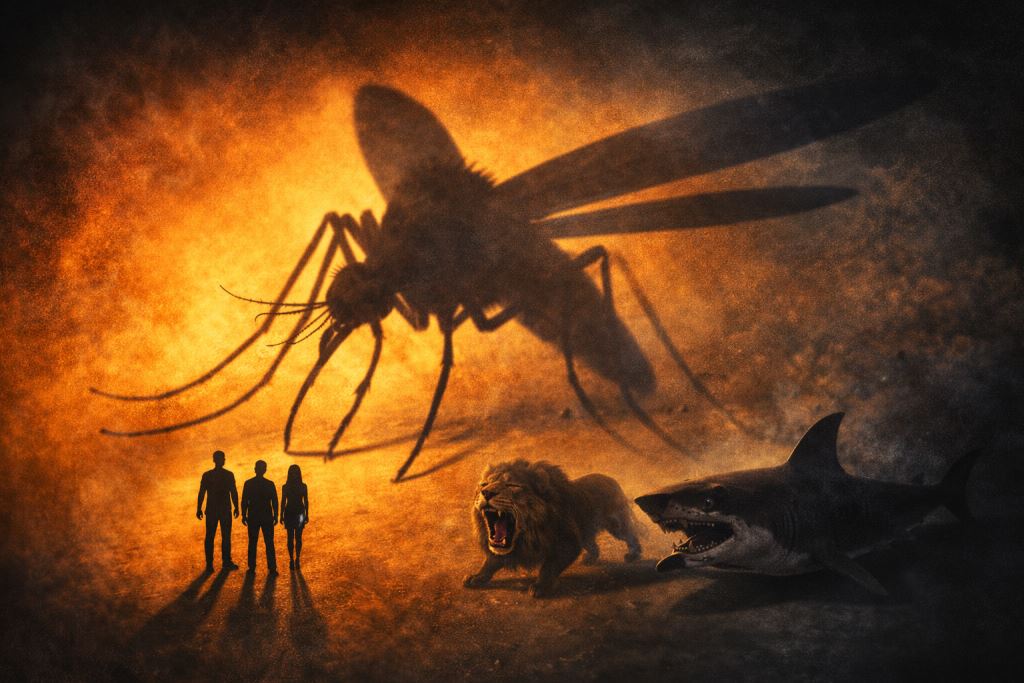
When we imagine the deadliest animals on Earth, our minds often jump to giant predators with teeth and claws.
But the truth is much more surprising.
The creatures responsible for the most human deaths are often:
- Tiny
- Overlooked
- Indirect killers through disease
From the mosquito that spreads malaria to the snake hidden in farmland, these animals remind us that danger in nature is not always obvious.
Sometimes the smallest creatures have the biggest impact on human survival.
Call to Action
Did any of these statistics surprise you?
Which animal do you think is the most dangerous?
Share your thoughts in the comments—and if you found this article interesting, explore more fascinating wildlife insights on our blog. You might discover that the animal kingdom is far more surprising than you ever imagined.