Introduction
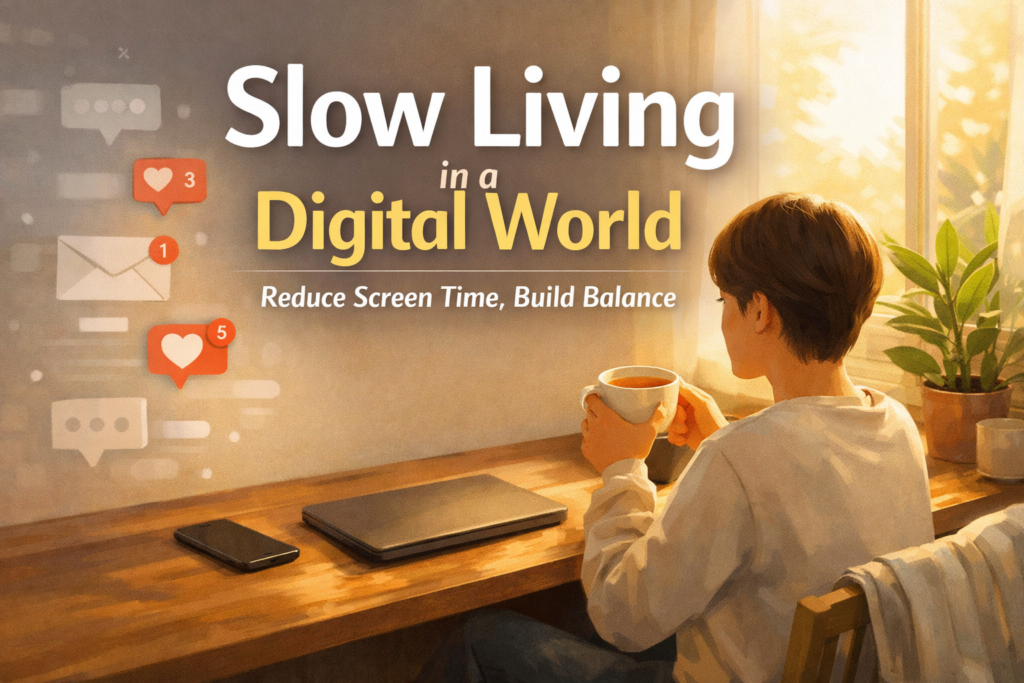
We live in a Digital World where notifications, endless feeds, and 24/7 connectivity compete for our attention. Yet many of us quietly crave the opposite: more calm, more presence, and a life paced intentionally. That desire is the heart of Slow Living—a practical antidote to digital overload that helps you reclaim time, focus, and well-being.

Why this matters right now
Average daily screen time has climbed substantially in recent years—studies put the global average near 6–7 hours a day, with some national averages (and younger cohorts) even higher. Excessive screen exposure is linked to disrupted sleep, stress, and reduced attention spans, and some platforms are intentionally designed to keep us scrolling longer. (Kutest Kids)
The good news: short, deliberate pauses from screens—“digital detoxes”—show measurable benefits for mood, life satisfaction, and stress reduction. A systematic review found that planned breaks from devices can improve mental well-being and reduce symptoms like stress and low mood. (PMC)
Slow Living: a quick primer
Slow Living is not about doing everything slowly or rejecting technology. It’s an intentional mindset: choosing quality over quantity, presence over constant responsiveness, and relationship over distraction. The movement grew from the slow-food ethos and now applies to work, travel, fashion, and media habits. Slow living asks one simple question repeatedly: Is this helping me live the life I actually want? (Wikipedia)
Compare: Fast Digital Habits vs Slow Living Habits
| Fast Digital Habit | Slow Living Alternative | Benefit |
|---|---|---|
| Open social apps first thing in the morning | Start with a 20–30 min tech-free ritual (stretch, journal, water) | Better mood, clearer priorities |
| Multitasking across tabs and messages | Single-task blocks (deep work) with scheduled breaks | Higher focus & output |
| Bedtime scrolling | Screen cutoff 60–90 minutes before sleep | Improved sleep quality |
| Reactive notifications | Notification triage: only essential apps allowed | Less anxiety, fewer interruptions |
(Stats and design research on platform engagement help explain why it’s hard to stop scrolling—see linked analysis above.) (The Washington Post)

Practical, research-backed steps to reduce screen time
Below are actionable strategies that combine slow-living principles with evidence-based techniques. Try one new habit at a time so changes stick.
1. Start with a tiny digital audit (10–20 minutes)
Record how you actually use your devices for 3 days (apps, time, triggers). Many people are surprised by where their time goes. Use the audit to pick one target (e.g., social video apps, news sites). (Tip: Most phones have built-in screen time reports.)
2. Create micro-rituals that replace first-thing/last-thing scrolling
Replace morning doom-scrolling with a 10–20 minute wind-up routine: stretch, make tea, write one gratitude line. Replace bedtime scrolling with a short reading habit or a calming playlist and a 60–90 minute screen cutoff—this helps sleep hygiene. (Harvard Health)
3. Build “phone-free zones” and windows
Designate places (bedroom, dining table) and times (meals, first hour after work) that are phone-free. This simple environmental change reduces automatic checking.
4. Use friction, not just willpower
Small frictions work: move apps to a folder, log out so opening them takes an extra step, or enable grayscale mode to reduce dopamine hits. Research on behavior change shows altering the environment is more reliable than relying solely on motivation.
5. Batch notifications and messages
Turn off non-essential notifications. Check email and social apps at two scheduled times a day. This reduces reactive behavior and gives you longer uninterrupted stretches for deep work.
6. Replace passive consumption with deliberate micro-joys
Swap 15–30 minutes of scrolling for an activity that stimulates creativity or connection—call a friend, sketch, cook, or go for a short walk. These alternatives often give greater lasting satisfaction.
7. Run a 24– or 48-hour mini digital detox (experiment)
Short experiments build confidence. Even a single day without non-essential screens can recalibrate what you miss vs. what you gain. Systematic reviews show these breaks can improve mood and life satisfaction. (PMC)
A simple weekly routine for slow tech balance
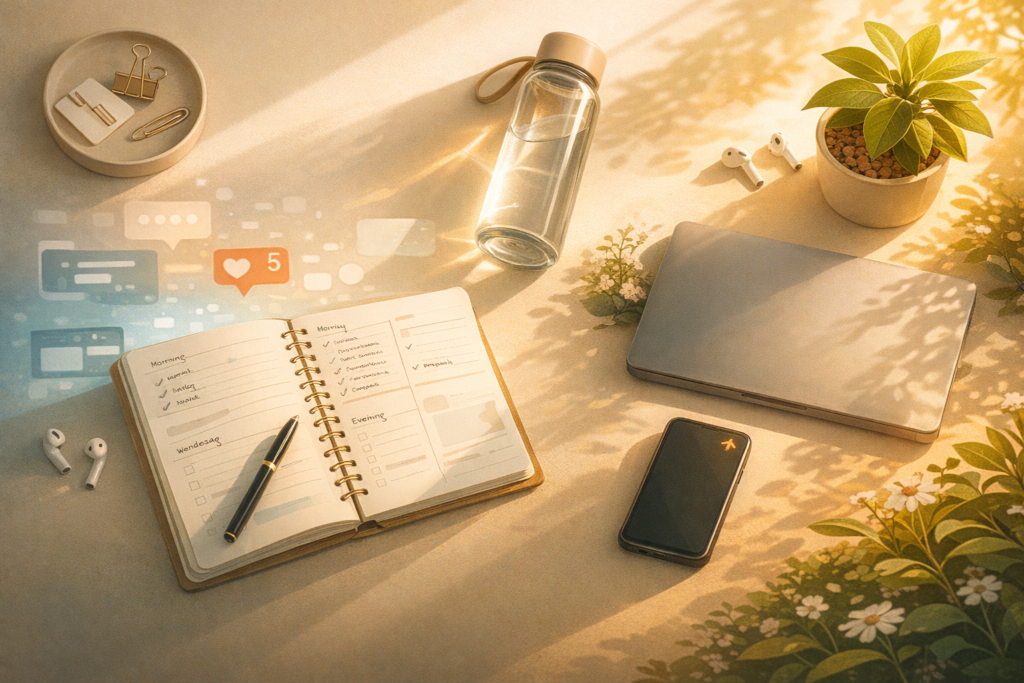
- Morning (30–60 min): No social apps. Movement + planning the day.
- Work blocks: 90 minutes deep work → 15 min break (walk/stretch). Phone on Do Not Disturb.
- Evening (2 hours before bed): Low-stimulus time (reading, family chat). Screen cutoff 60–90 min before sleep.
- Weekend: One extended tech-light window (half day) for creative projects or nature time.
Personal perspective: small wins that compound
When I swapped my morning social feed for a 20-minute walk and a short notebook check-in, the first thing I noticed was not productivity—it was presence. Meals felt richer, conversations were less interrupted, and evenings became truly restful. These micro-wins stack: one removed check often prevents twenty future distractions.
Tools & tech that help (without hijacking attention)
- Use focus/forest style apps that reward single-tasking.
- Set app time limits using built-in phone settings.
- Use grayscale mode and notification grouping.
- Try “do not disturb” schedules and priority caller lists.
(These are practical tools—use them as scaffolding, not crutches.)
Visual quick-reference: Screen reduction strategies table
| Strategy | What to do | Time to try |
|---|---|---|
| Audit | Track 3 days of usage | 30 min |
| Morning swap | Replace feed with walk/journal | 7 days |
| Phone-free dinner | No devices at table | Ongoing |
| Notification triage | Turn off non-essentials | 1 session |
| Mini detox | 24–48 hours offline | Once a month |
Further reading & resources
- For why screens impact sleep and attention, see Harvard’s practical tips on family screen habits. (Harvard Health)
- For evidence on digital detox effects: systematic review on mental health outcomes. (PMC)
- For background on the slow movement and philosophy: Slow Living resources and overviews. (Slow Living LDN.)
Suggested internal links:
- /health-fitness (for sleep & wellbeing tips)
- /self-improvement (for routines & productivity)
- /top-ten (for a companion post: “Top 10 Small Digital Detox Habits”)
Suggested external links: link the phrases above to the Harvard tips and the digital detox review for credibility. (Harvard Health)
Closing: a small challenge (try it now)
Pick one habit from this post and run a 7-day experiment. Start tiny—swap your first-thing social check for a five-minute stretch and a glass of water. Track how you feel at the end of each day. Small, consistent shifts are how slow living wins in a noisy Digital World.
Call to action: Tried the 7-day experiment? Share your experience in the comments below or subscribe to get a free printable “Slow Living Tech Audit” worksheet to help you track progress.