
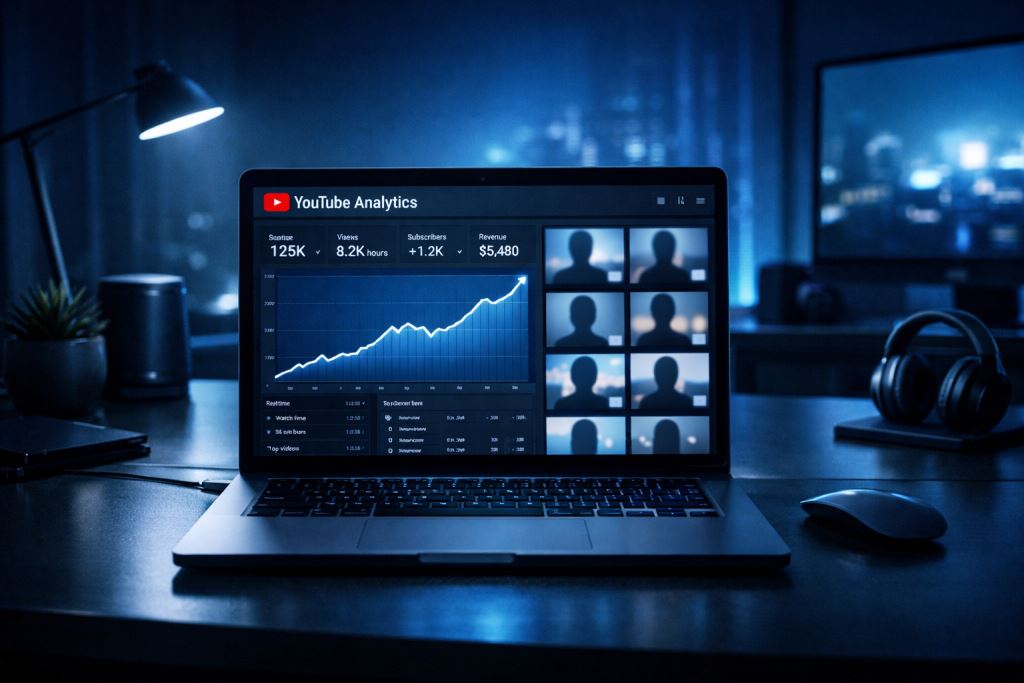
In 2026, building a profitable online business no longer requires showing your face, renting a studio, or hiring a full production team. With YouTube Automation, creators are launching scalable media brands using systems, freelancers, and AI tools—without ever stepping in front of a camera.
If you’ve ever thought, “I want passive income, but I don’t want to be a YouTuber personality,” this guide is for you.
This isn’t another recycled “copy-paste videos and get rich” tutorial. We’ll break down what actually works in 2026, how the landscape has evolved, and how to build a sustainable faceless channel step-by-step.
What Is Youtube Automation (Really)?
Let’s clear up the biggest misconception first.
Youtube Automation is not “set it and forget it.” It’s building a content system where:
- You don’t appear on camera.
- You outsource or automate scripting, voiceovers, editing, thumbnails, and research.
- You focus on strategy, analytics, and scaling.
Think of it as running a small digital media company instead of being a solo creator.
Platforms like YouTube reward consistency, watch time, and audience retention—not whether your face is visible.
Why 2026 Is a Unique Opportunity
The opportunity today is different from 2020–2023.
Here’s why:
1. AI Has Reduced Production Costs
Tools like ChatGPT for scripting, ElevenLabs for voiceovers, and CapCut for editing have dramatically lowered the barrier to entry.
You can now produce high-quality content for 70–80% less than traditional outsourcing.
2. Advertiser Spending Is Increasing
According to data from Statista, global digital video ad spending continues to grow year over year. That means more money flowing into YouTube’s ad ecosystem.
3. Search-Based Content Still Wins
While short-form platforms like TikTok dominate attention, YouTube remains the second-largest search engine in the world.
Evergreen informational content continues to generate views for years—not days.
Faceless YouTube vs Personal Brand Channels
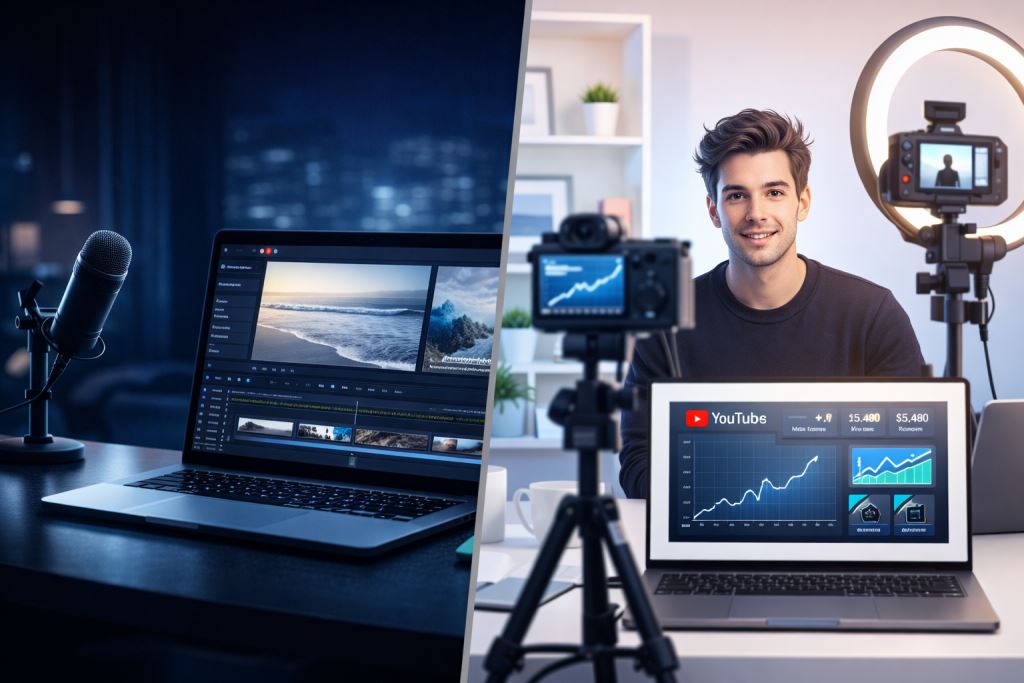
Before you start, understand the difference.
| Factor | Faceless Youtube Automation | Personal Brand Channel |
|---|---|---|
| On-camera presence | Not required | Required |
| Scalability | High (team-based) | Limited (you are the brand) |
| Startup cost | Medium | Low |
| Burnout risk | Lower | Higher |
| Brand loyalty | Content-driven | Personality-driven |
If you want a sellable digital asset in the future, automation-style channels are easier to package and sell.
Step-by-Step: How to Start a Faceless Youtube Automation Business
Step 1: Choose a Profitable, Sustainable Niche
Don’t chase trends. Build around:
- High CPM (finance, business, tech, health)
- Evergreen demand
- Strong search volume
- Monetization beyond ads
High-Performing Faceless Niches in 2026:
- Personal finance & investing
- AI & tech explainers
- Documentary-style history
- Luxury & business case studies
- Productivity & self-improvement
Use tools like:
- YouTube search suggestions
- Google Trends
- Competitor channel analysis
Look for channels with:
- Consistent uploads
- 50K–500K subscribers
- Simple editing style
That’s your proof of concept.
Step 2: Validate Before You Commit
Here’s what most beginners do wrong:
They build 10 videos before testing demand.
Instead:
- Analyze top 20 videos in your niche.
- Study titles and thumbnails.
- Look at average views vs subscriber count.
- Identify content gaps.
If multiple small channels are getting 50K+ views per video, the niche is validated.
Step 3: Build Your Production System
You don’t need a big team at the start.
Minimum Viable Team (MVT)
- Scriptwriter
- Voiceover artist (or AI voice)
- Video editor
- Thumbnail designer
In the beginning, you can combine roles.
Cost Breakdown (Average)
| Role | Outsourced Cost Per Video | AI-Enhanced Cost |
|---|---|---|
| Script | $30–$80 | $10–$20 |
| Voiceover | $20–$60 | $5–$15 |
| Editing | $50–$150 | $30–$70 |
| Thumbnail | $10–$30 | $5–$15 |
You can realistically launch with $300–$500 total initial budget for 4–5 videos.
Step 4: Master Retention (This Is Everything)
In 2026, YouTube’s algorithm prioritizes:
- Average view duration
- Click-through rate (CTR)
- Watch time per session
Retention is more important than subscriber count.
Structure Your Script Like This:
- Hook (0–15 sec)
Open with curiosity or controversy. - Preview
Tell viewers what they’ll learn. - Fast-Paced Sections
Change visuals every 5–8 seconds. - Open Loops
Tease upcoming insights. - Strong Ending
Encourage another video click.
If viewers leave at 30%, the algorithm won’t push your video.
Step 5: Monetization Beyond AdSense
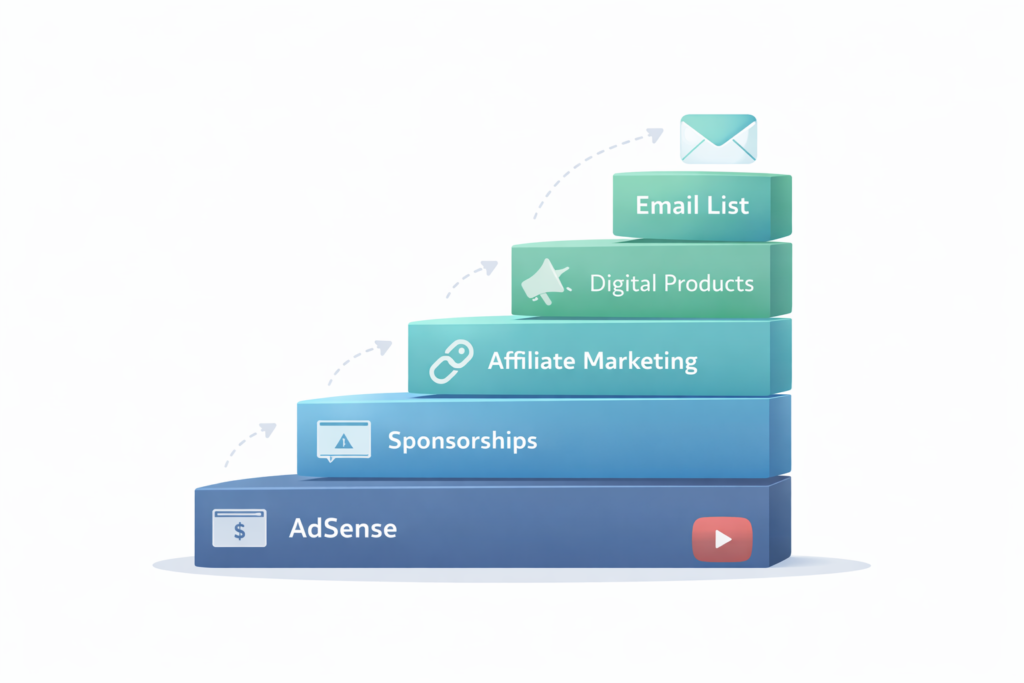
Ad revenue is only one stream.
Smart Monetization Stack
- YouTube AdSense
- Affiliate marketing
- Digital products
- Sponsorships
- Email list building
For example:
A finance channel can promote brokerage platforms.
A tech channel can link software tools.
A productivity channel can sell templates.
This is where Youtube Automation becomes a real business—not just a side hustle.
Key Insights Most Gurus Don’t Tell You

1. It’s Not Passive at the Start
You’ll spend the first 3–6 months testing.
Expect:
- Low views initially
- Thumbnail revisions
- Title changes
- Script improvements
The breakthrough often comes around video 15–25.
2. Thumbnail Psychology Beats Editing
You can have mediocre editing and still win.
But:
Bad thumbnail = no clicks.
Study contrast, emotion, curiosity gaps, and bold typography.
3. Consistency > Perfection
Uploading 2 decent videos weekly beats 1 perfect video monthly.
The algorithm rewards momentum.
4. Treat It Like an Asset
When structured correctly, your channel becomes:
- Sellable
- Outsource-ready
- Predictable in revenue
Digital media assets are increasingly sold on marketplaces, similar to websites and SaaS tools.
Tools That Give You an Edge in 2026
Here’s a lean tech stack:
| Function | Recommended Tool |
|---|---|
| Scripting | ChatGPT |
| SEO Research | TubeBuddy |
| Voiceover | ElevenLabs |
| Editing | CapCut |
| Analytics | YouTube Studio |
Use YouTube Studio obsessively. Data beats guesswork.
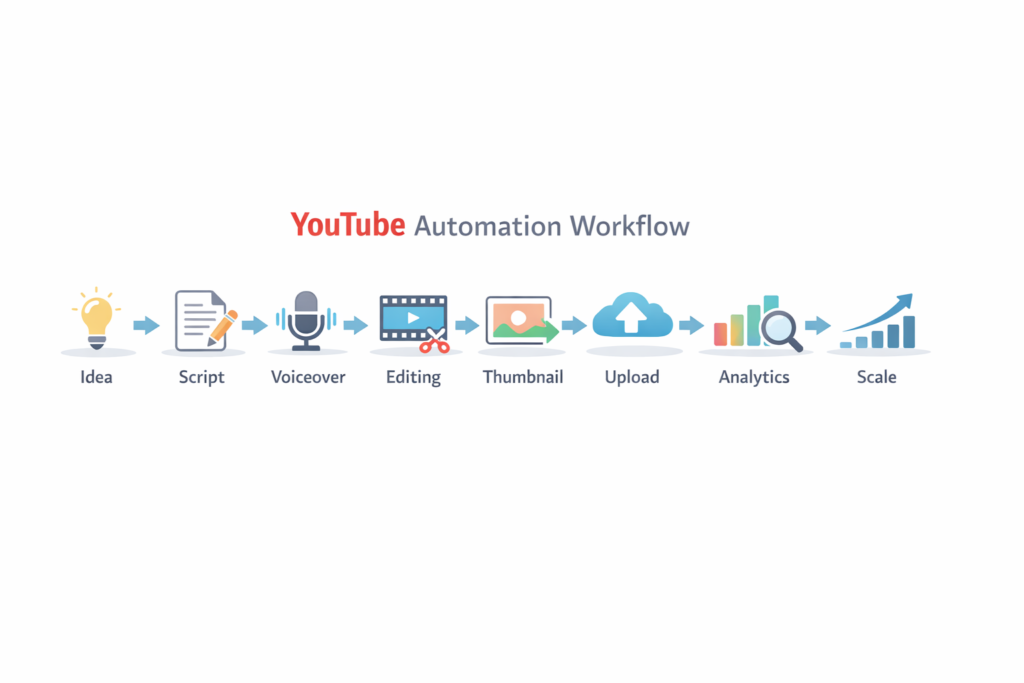
Visual Workflow (Recommended Production Flow)
📸 Insert Infographic Here:
Idea → Script → Voiceover → Edit → Thumbnail → Upload → Analyze → Improve
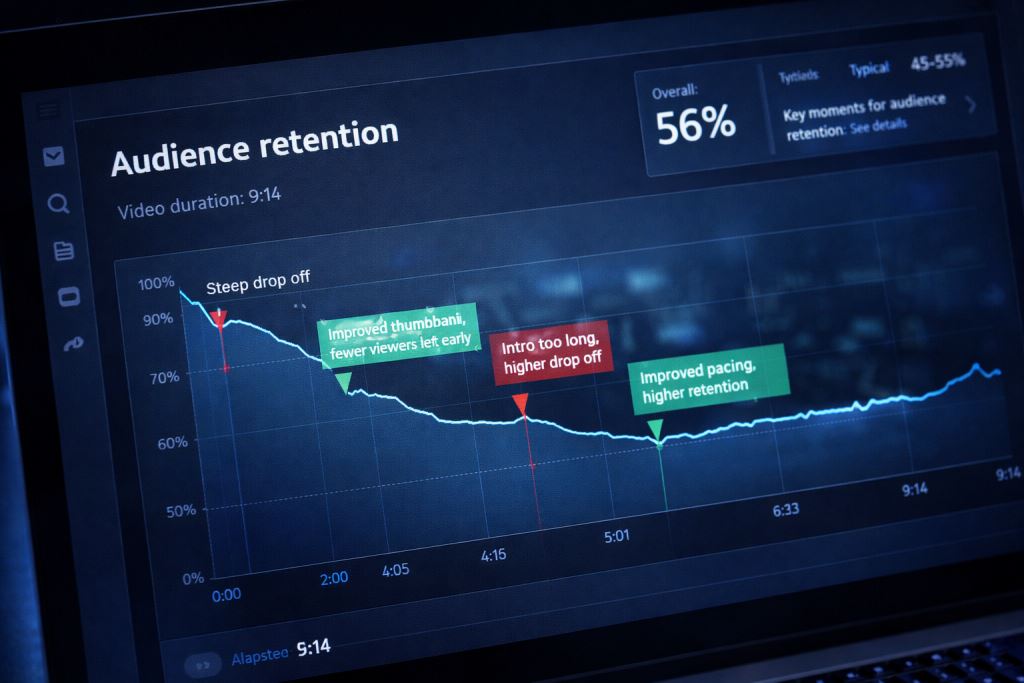
📊 Insert Retention Curve Screenshot Example:
Show a sample retention graph explaining drop-off points.
These visuals dramatically improve reader retention on blog pages as well.
Common Mistakes to Avoid
- Choosing ultra-competitive niches (e.g., “motivation”)
- Copying competitors directly
- Ignoring analytics
- Scaling too early
- Quitting before 20 videos
Most channels fail not because the model doesn’t work—but because consistency breaks.
Realistic Timeline to Profit
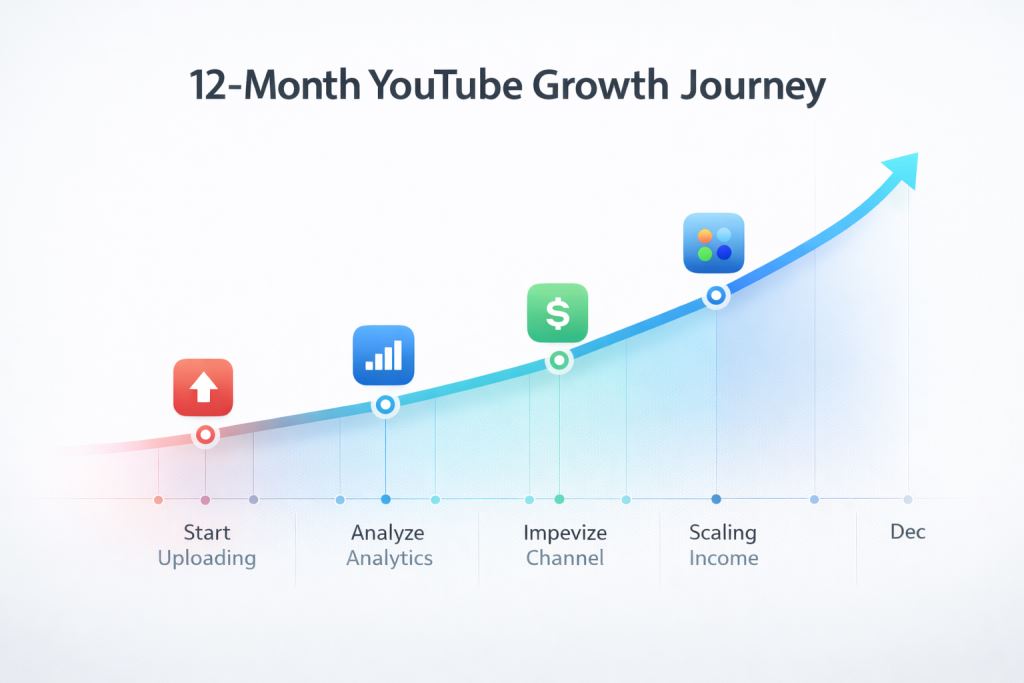
| Month | Focus | Expected Outcome |
|---|---|---|
| 1 | Research + Upload 4–8 videos | Data collection |
| 2–3 | Improve thumbnails + hooks | First traction |
| 4–6 | Monetization approval | Revenue begins |
| 6–12 | System scaling | $1K–$5K/month possible |
Of course, results vary. But structured execution dramatically increases odds.
Final Thoughts: Is YouTube Automation Worth It in 2026?
Yes—but only if you approach it as:
- A system
- A media brand
- A long-term asset
Not a quick money hack.
The creators who win in 2026 understand:
- Audience psychology
- Data-driven decisions
- Scalable systems
If you’re willing to treat it like a business instead of a lottery ticket, the opportunity is still massive.
Your Next Step
If you’re serious:
- Pick one niche today.
- Analyze 20 competitor videos.
- Outline your first 5 scripts.
- Commit to 30 days of consistent uploads.
And if you found this guide helpful, share it with someone who’s thinking about starting a Youtube Automation channel—or bookmark it for your launch plan.
The opportunity is there.
The question is: will you execute?