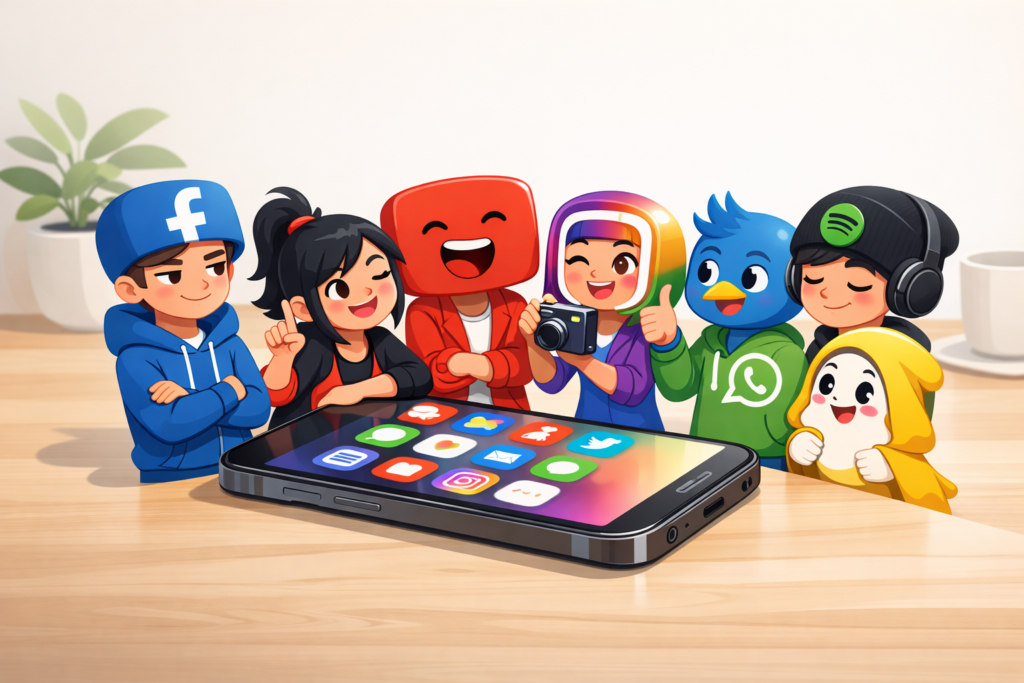
Introduction: When Mobile Apps Start Acting Like People
Ever noticed how mobile apps feel less like tools and more like personalities living inside your phone? Some are clingy, some are helpful, some are dramatic, and a few are quietly judging your screen time at 2:17 AM.
We don’t just use apps—we live with them. They wake us up, organize our schedules, entertain us, and sometimes ruin our productivity. In fact, according to a report by DataReportal, the average smartphone user spends several hours daily inside apps, turning them into constant digital companions.
So, what if these mobile apps became actual people sharing a house for one day?
Let’s imagine their morning routines, arguments, and late-night chaos—and discover what this says about our own tech habits.
Morning: The Alarm Clock Who Won’t Stop Talking
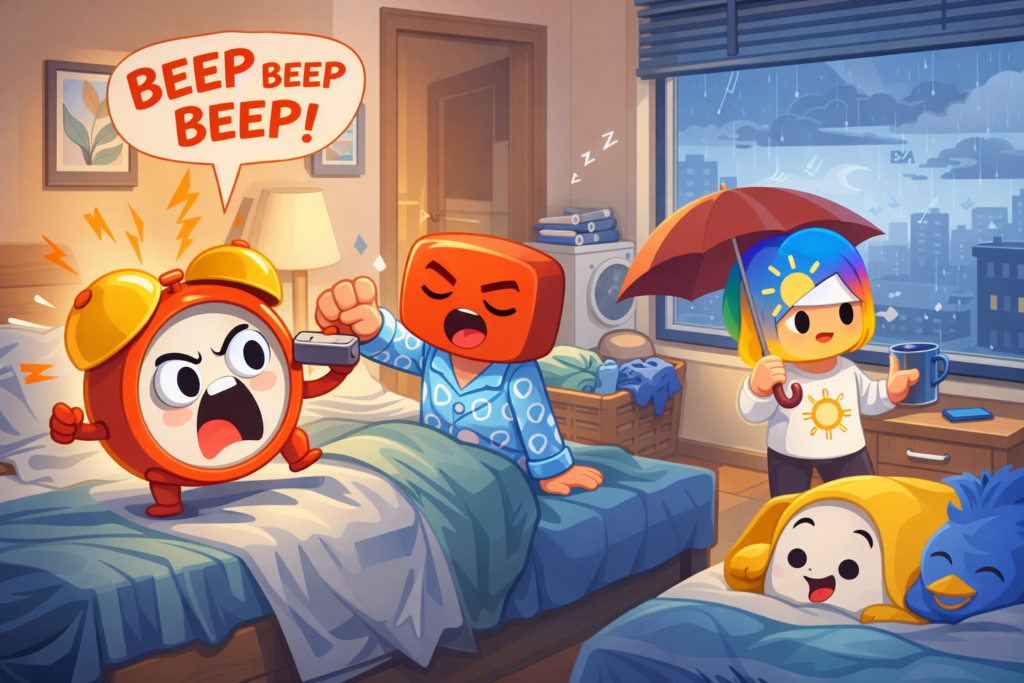
The day begins with Alarm App—the overly energetic roommate who believes everyone should wake up at 6:00 AM.
- Alarm App: “Good morning! Time to be productive!”
- YouTube: hits snooze
- Instagram: “Wait, I need 10 more minutes for a sunrise selfie.”
Meanwhile, Weather App stands by the window predicting doom:
“There’s a 12% chance of rain. You should panic.”
Personality Traits of Morning Apps
| App | Human Personality | Morning Behavior |
|---|---|---|
| Alarm | Strict life coach | Won’t let anyone sleep |
| Weather | Over-cautious planner | Always predicts something |
| Calendar | Organized manager | Lists everyone’s tasks |
| Corporate coworker | Arrives stressed |
Morning apps reflect our desire for control and productivity. According to a Pew Research study, people check their phones within minutes of waking up—often starting with communication or productivity apps.
In human terms?
We wake up and immediately attend a digital staff meeting.
Midday: The Social Apps Take Over
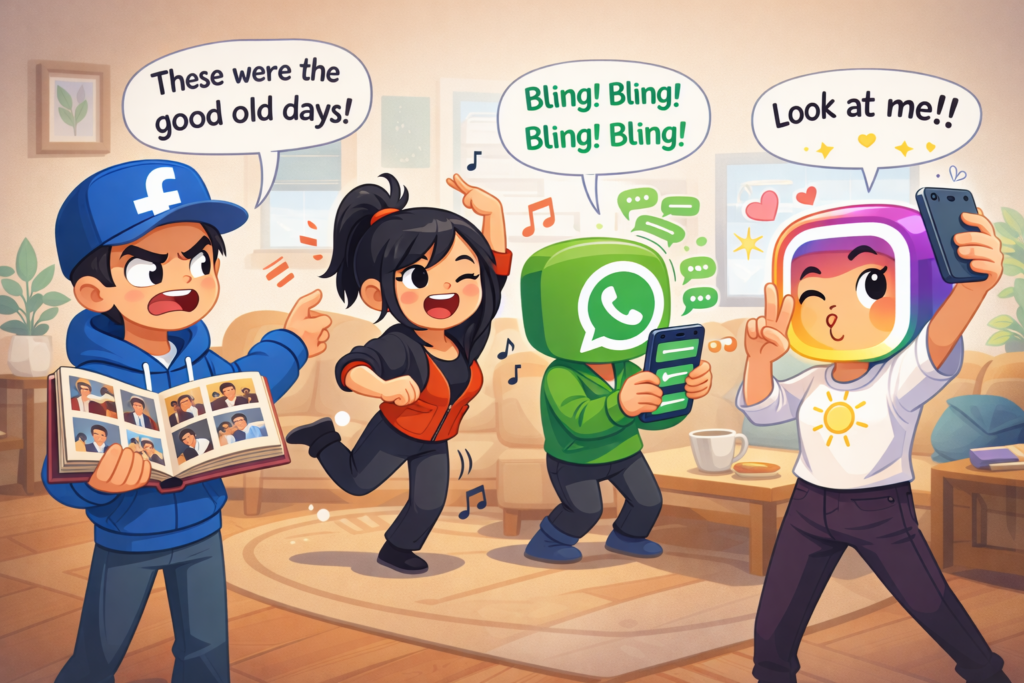
By noon, the house is buzzing. Social media apps are the loudest personalities in the room.
- Instagram: the influencer who only speaks in aesthetic captions
- WhatsApp: the friend who sends 27 messages in a row
- Facebook: the nostalgic storyteller bringing up memories from 2012
- TikTok: the hyperactive entertainer who never stops dancing
They gather in the living room for a group chat argument:
WhatsApp: “Why is nobody replying instantly?”
Instagram: “I’m posting a story about lunch.”
TikTok: “I just made lunch into a dance trend.”
LinkedIn: “Can we keep this professional?”
What This Says About Us
Social apps mirror our need for connection and validation. Research from Statista shows billions of users worldwide engage with social platforms daily, often multiple times per hour.
If these apps were people, they’d be:
- Competing for attention
- Sharing updates constantly
- Comparing themselves to each other
In other words, they act a lot like us.
Afternoon: Productivity Apps Try to Save the Day
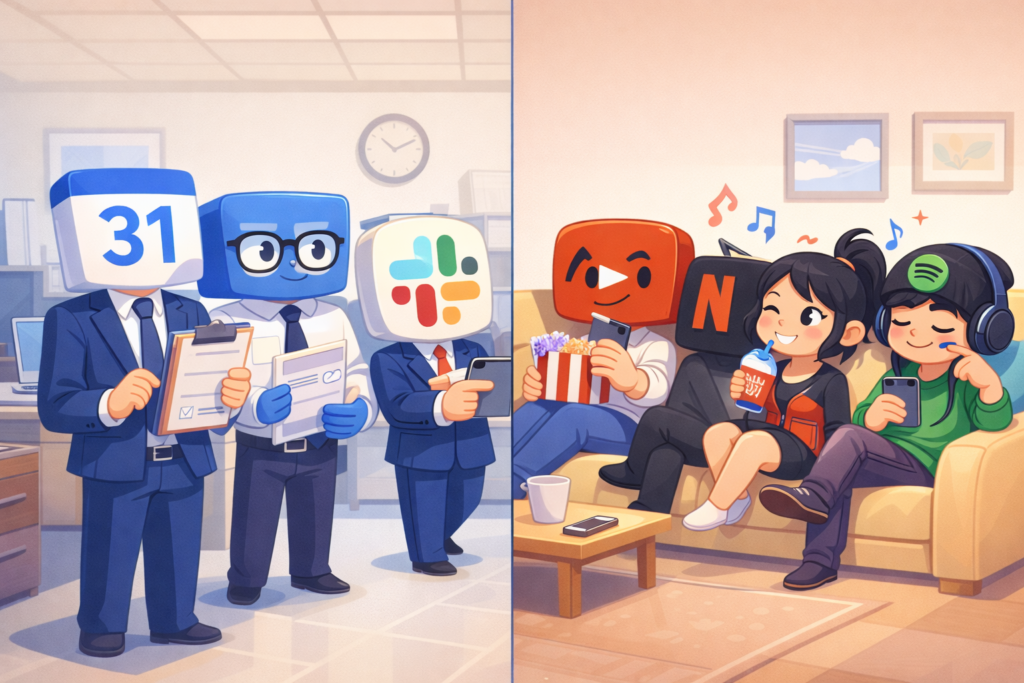
By 3 PM, chaos peaks. Enter the productivity crew:
- Notes App: the quiet genius
- Google Docs: the collaborative coworker
- To-Do List: the strict planner
- Reminder App: the persistent parent
They attempt an intervention.
To-Do List:
“You were supposed to work today.”
YouTube:
“But I watched a documentary… about productivity.”
Reminder App:
“Drink water. Also, finish your tasks. Also, stand up.”
The Productivity vs Entertainment Battle
| Category | Personality Type | Goal |
|---|---|---|
| Productivity Apps | Responsible adults | Get things done |
| Entertainment Apps | Fun friends | Keep you happy |
| Shopping Apps | Impulsive spender | Buy things |
| Fitness Apps | Motivational trainer | Improve habits |
This daily tug-of-war reflects real user behavior. Many people switch between productivity and entertainment apps dozens of times a day. Our phones become mini ecosystems of competing personalities.
Evening: Entertainment Apps Take Control
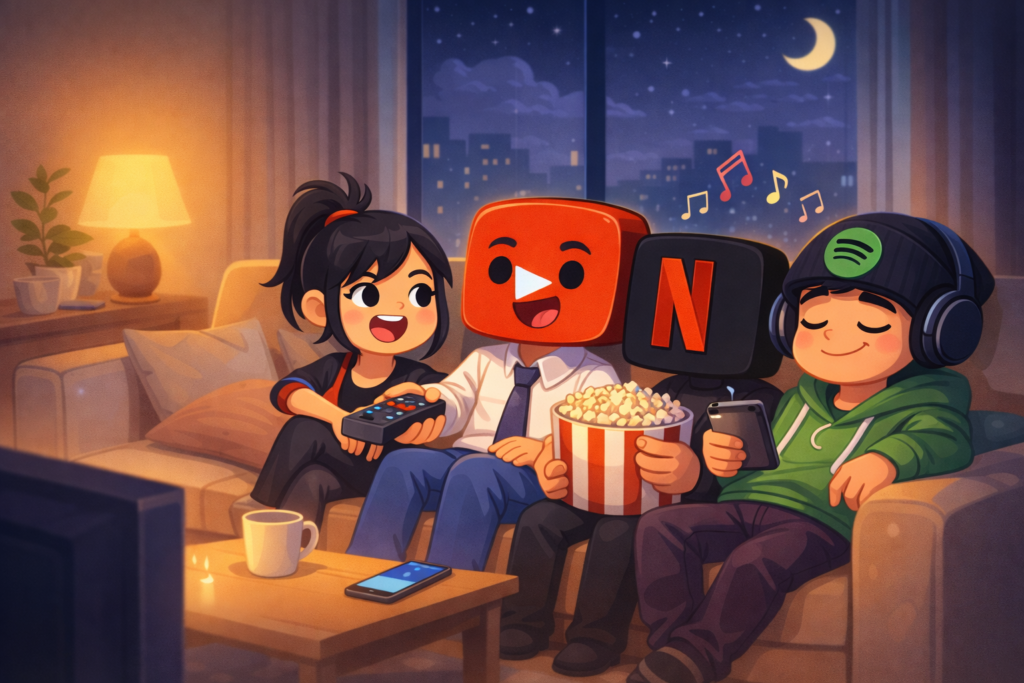
At 7 PM, the entertainment apps take over the house.
YouTube walks in wearing pajamas:
“Just one video before bed.”
Netflix adds:
“Let’s watch something short… like 6 episodes.”
Spotify plays background music like a thoughtful friend who always knows your mood.
Suddenly, it’s midnight.
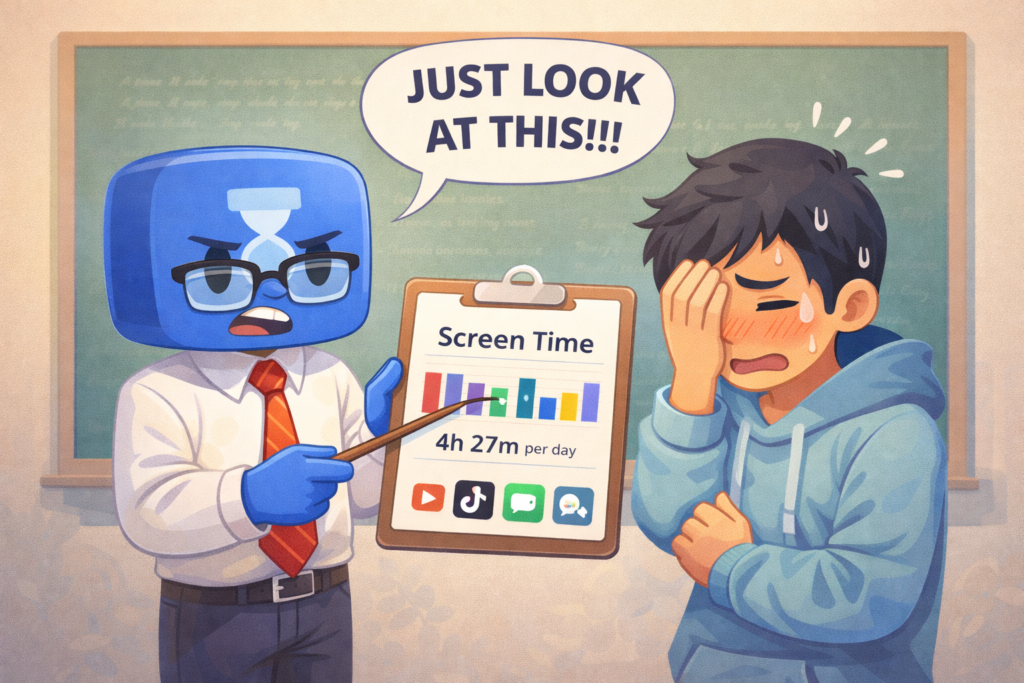
Screen Time App enters with a disappointed look:
“You’ve been here for 6 hours.”
Why Entertainment Apps Feel So Human
Entertainment apps mimic real-life companions:
- YouTube = storyteller friend
- Spotify = personal DJ
- Netflix = binge partner
- Gaming apps = competitive sibling
These apps aren’t just platforms—they simulate social experiences. According to industry reports from App Annie (now data.ai), entertainment apps dominate global app usage time.
They’re designed to feel like company.
And sometimes, they’re better at it than people.
Late Night: The Quiet Observers
As everyone sleeps, a few apps remain awake.
- Battery App: silently worried
- Security App: standing guard
- Updates App: planning tomorrow’s interruptions
They whisper:
Battery:
“We gave everything today.”
Storage App:
“Also… we need to talk about those 4,000 screenshots.”
These background apps represent the invisible systems supporting our digital lives. We rarely notice them—until something goes wrong.
Key Insights: What This Funny Scenario Reveals
Imagining mobile apps as people isn’t just entertaining—it reveals deeper truths about how we interact with technology.
1. We Form Emotional Bonds with Apps
Apps aren’t just tools; they feel like companions.
We rely on them for:
- Connection
- Entertainment
- Productivity
- Comfort
2. Our Digital Lives Mirror Real Life
If apps lived together, their personalities would reflect our own behaviors:
- Overworking
- Over-sharing
- Overthinking
- Over-scrolling
3. Balance Is the Real Goal
The “house” of apps works best when everyone cooperates.
Too much entertainment leads to procrastination.
Too much productivity leads to burnout.
The ideal digital life is like a well-balanced group chat.
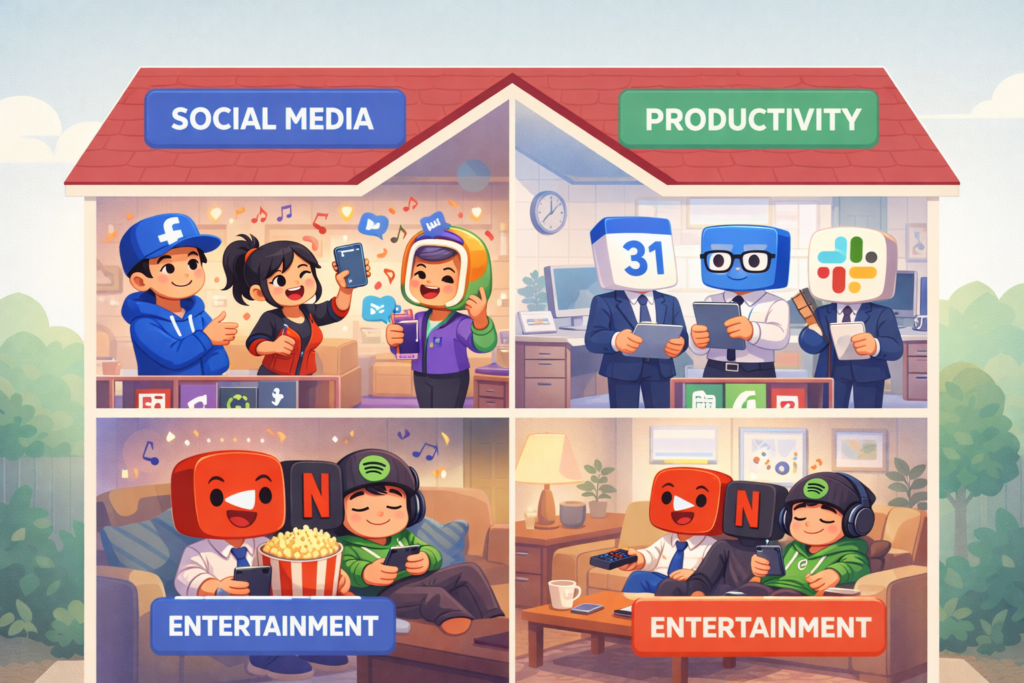
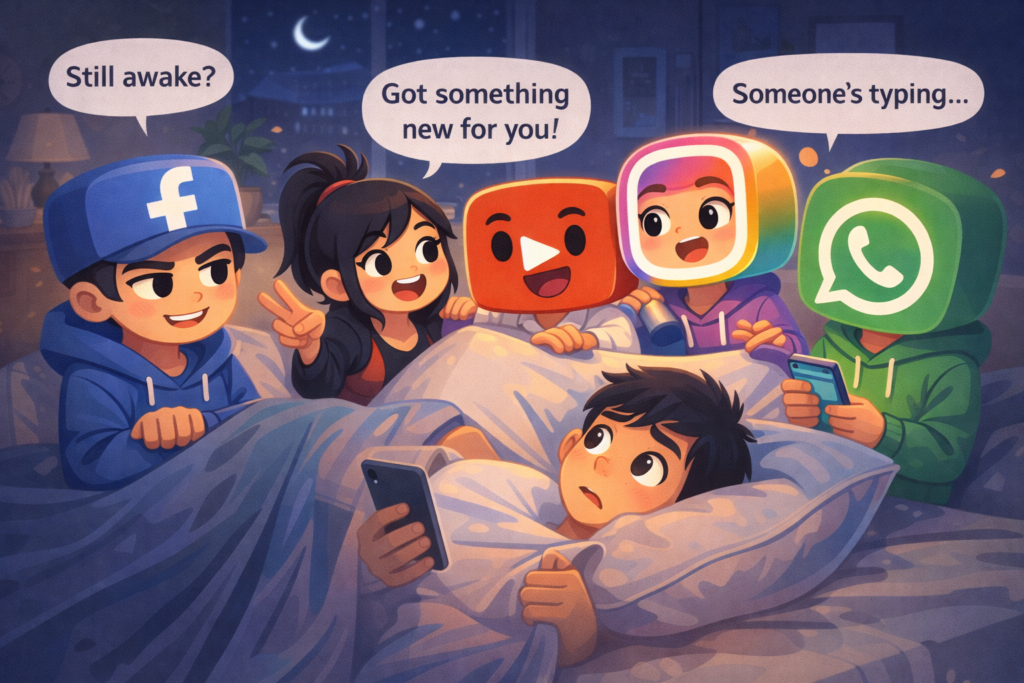
Visual Break: A Day in the App House
Suggested Image/Infographic:
- Illustration of apps as roommates
- Morning vs night scenes
- Productivity vs entertainment comparison
Suggested Placement: After this section for visual engagement.
If Your Apps Were Roommates…
Ask yourself:
- Which app would be the loudest?
- Which would be the most helpful?
- Which would never sleep?
- Which would judge your screen time?
You might discover that your phone isn’t just a device—it’s a shared apartment of personalities shaping your habits.
Conclusion: We Are the House They Live In
If mobile apps had human personalities, their daily lives would look suspiciously like ours: busy mornings, social afternoons, productive intentions, and late-night scrolling.
The humor in this idea highlights a real truth:
We’ve built a digital world filled with personalities that influence how we think, work, and relax.
The question isn’t whether apps shape our lives.
It’s how we choose to live with them.
So tomorrow morning, when your alarm goes off and your apps start talking again, remember:
You’re not just using them.
You’re living in their world—and they’re living in yours.
Quick Comparison Table: Your Phone’s “Residents”
| App Type | Personality | Role in Your Day |
|---|---|---|
| Social Media | Chatty friend | Connection & updates |
| Productivity | Manager | Work & planning |
| Entertainment | Fun buddy | Relaxation |
| Fitness | Coach | Health reminders |
| Shopping | Impulsive buyer | Spending temptations |
Call to Action
Which app would be the most dramatic if it were a person?
Tell us in the comments!
If you enjoyed this post, share it with a friend who spends way too much time on their phone.
And explore our related posts on digital habits, productivity, and tech culture to better understand your relationship with mobile apps.